Saving your money for next purchases
Delivery – when you want and anywhere

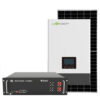
This Package Includes:
1 x LUXPOWER 5.5KW
8 x 540W Solar Panels
100 x 6mm Solar Cable
8 x MC4 Connectors
1 x PVC2 Combiner
1 x Ac Protection Box + CHANGEOVER
1 x Dyness 10.24kwh Battery
2 x Lug 35mm
4 x 35mm Battery Cable
1 x Dc Disconnector
1 x AVS Protection
1 x Swl-01N Spotlights FREE!
COMPLETE MOUNTING SYSTEM FOR TILE/IBR ROOF
SNA5000 serial offgrid inverter can support the system to work as a backup power or a replacement of diesel generator. Since the inverter support paralleling function, the capacity of system can range from 3kW to 50kW. The inverter support working modes.
Pure Off-grid working mode: working as a traditional off grid inverters, can set out put to utility first, battery first or solar first.
Hybrid working mode: Working as a hybrid, support solar and utility jointly take the load, can set to self consumption mode or charge priority node.
There are many advantages to using a li-ion cell of battery. As a result the technology is being used increasingly for a huge number of widely varying applications. Everything from small electronic devices, through smartphones and laptops to vehicles and many other applications.
The advantages of Li-ion technology mean that these batteries are finding an increasing number of applications, and as a result a huge amount of development is being invested into them.
The li-ion battery advantages include:
High energy density: The high energy density is one of the chief advantages of lithium ion battery technology. With electronic equipment such as mobile phones needing to operate longer between charges while still consuming more power, there is always a need to batteries with a much higher energy density. In addition to this, there are many power applications from power tools to electric vehicles. The much higher power density offered by lithium ion batteries is a distinct advantage. Electric vehicles also need a battery technology that has a high energy density.
Self-discharge: One issue with many rechargeable batteries is the self discharge rate. Lithium ion cells is that their rate of self-discharge is much lower than that of other rechargeable cells such as Ni-Cad and NiMH forms. It is typically around 5% in the first 4 hours after being charged but then falls to a figure of around 1 or 2% per month.
Low maintenance: One major lithium ion battery advantage is that they do not require and maintenance to ensure their performance.
Ni-Cad cells required a periodic discharge to ensure that they did not exhibit the memory effect. As this does not affect lithium ion cells, this process or other similar maintenance procedures are not required. Likewise lead acid cells require maintenance, some needing the battery acid to be topped up periodically.
5.5KW LUXPOWER PRO 10.24

Reviews
There are no reviews yet.